The Front Cover
Santana – Caravanserai -Columbia Records (Vinyl LP)
Santana – Caravanserai -Columbia Records (Vinyl LP)
Couldn't load pickup availability
Share
This is the fourth studio album by Santana, released in October 1972. A pivotal and transitional record in the band’s career, Caravanserai marks their shift from Latin-rock hit singles toward longer, more experimental, jazz-fusion and spiritually infused instrumental explorations. It was the last Santana album to feature the classic early lineup (including Gregg Rolie, Neal Schon, Michael Carabello, José Areas, Michael Shrieve, and David Brown), with Carlos Santana’s visionary guitar work at the forefront.
The front cover is an iconic, minimalist masterpiece: a vast, serene desert landscape at sunset with a massive, glowing orange sun dominating the sky. A silhouetted caravan of camels and robed figures moves slowly across the horizon line against a deep blue-to-teal gradient sky. The title “Caravanserai” appears in elegant white cursive script in the top right, with “Santana” above it in matching style. The design evokes mysticism, journey, and timelessness — perfectly matching the album’s exploratory, almost meditative atmosphere.
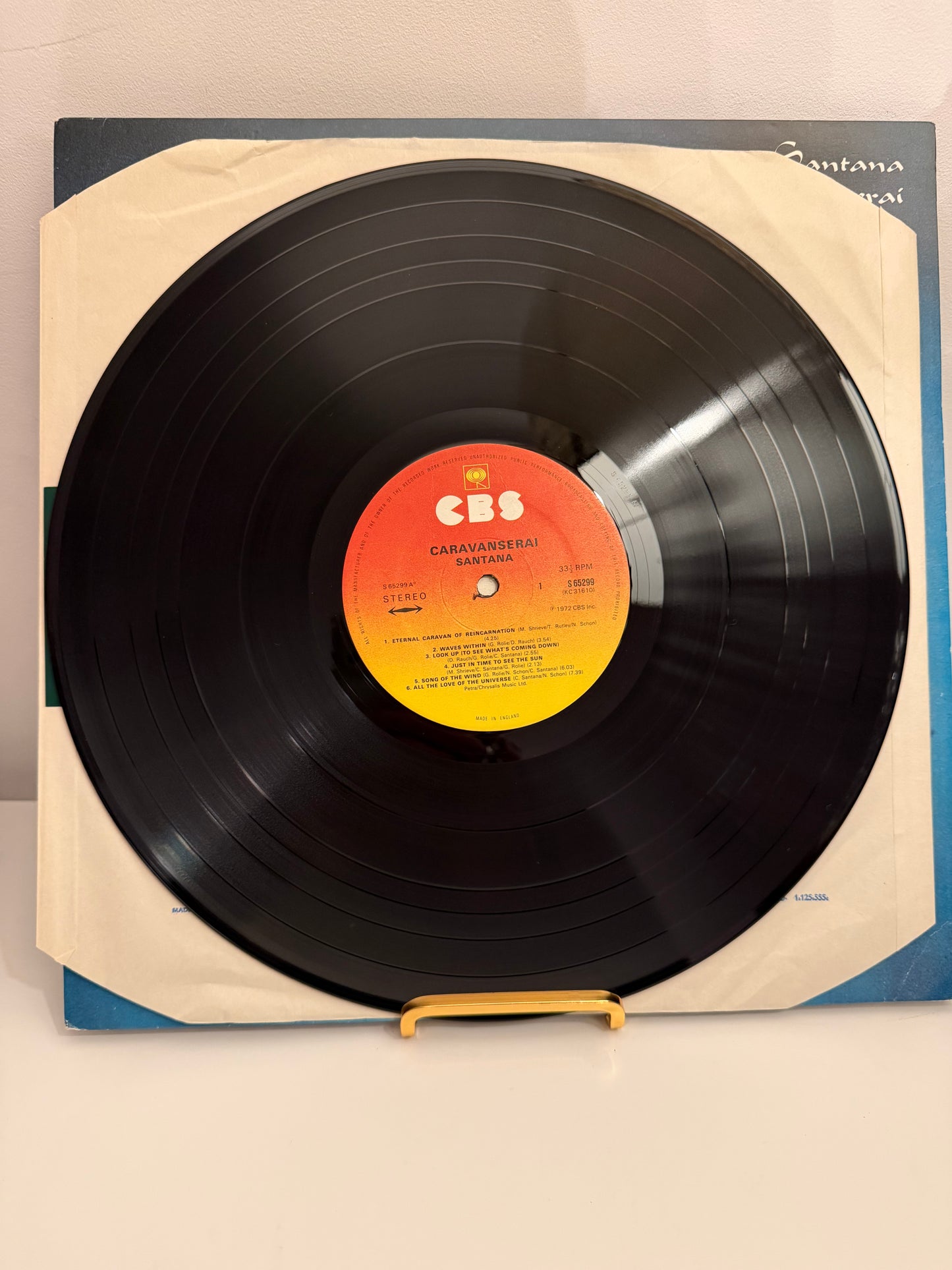
The back cover flips the scene to a nighttime desert under a starry sky with a bright full moon, repeating the camel caravan silhouette in a cooler blue palette, creating a day-to-night continuity. It lists the 10-track lineup (mostly extended instrumentals):
Side One
1. Eternal Caravan of Reincarnation (4:28)
2. Waves Within (3:55)
3. Look Up (To See What’s Coming) (3:17)
4. Just in Time to See the Sun (2:18)
5. Song of the Wind (6:04)
Side Two
1. All the Love of the Universe (7:33)
2. Future Primitive (4:12)
3. Stone Flower (6:13)
4. La Fuente del Ritmo (4:34)
5. Every Step of the Way (9:00)
All tracks are credited to various band members (primarily Carlos Santana, Gregg Rolie, Neal Schon, and José Areas), with production by Carlos Santana and Mike Shrieve. The album features extended percussion jams, jazz-influenced solos, and a more organic, less commercial sound compared to earlier hits like “Black Magic Woman” or “Oye Como Va.”
A landmark in Santana’s discography — beloved by fans of 1970s fusion, jazz-rock, and psychedelic grooves — often hailed as one of their most artistic and cohesive works.
The vinyl is housed in its original laminated picture sleeve, with credits and track details printed on the reverse.